How Smart Container Management Can Save Millions
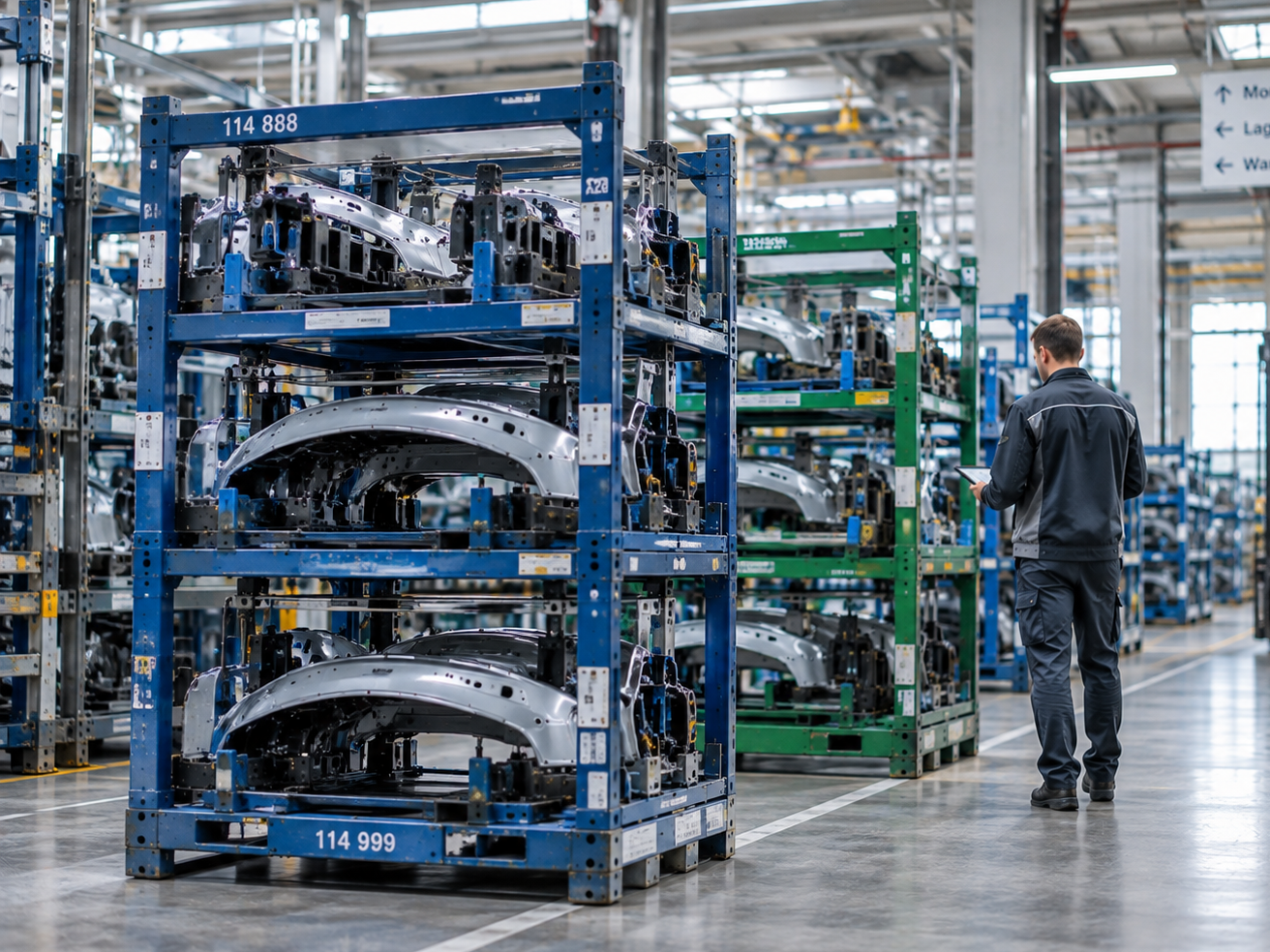
//AI generated Picture
What Companies Should Know About Smart Container Management
Question 1: Why do load carriers often result in unnecessarily high costs?
In our projects, we regularly observe that companies plan their container inventories based on historical assumptions, even though actual turnover rates are hardly transparent.
Without information on location, turnaround times, or actual usage, the following issues arise:
- unnecessary replenishment purchases
- high capital tied up
- rising storage costs
- production risks due to perceived bottlenecks
Especially in international supply chains, these effects quickly add up to millions. The greatest leverage therefore lies in data-driven management of the existing fleet.
Question 2: How can smart container management specifically reduce costs?
Modern container management is based on transparency.
Digital technologies such as IoT tracking and sensor systems make it possible to track containers throughout the entire supply chain. The data collected enables companies to
- optimize turnover,
- identify bottlenecks early on,
- plan inventory based on demand,
- reduce losses,
- and avoid unnecessary new purchases.
However, technology alone is not enough. It is only the combination of data, processes, and control that unlocks the economic benefits.
Question 3: Is a tracking solution alone sufficient?
No, tracking provides transparency—economic benefits only arise when the right decisions are made based on this data.
Among other things, companies need:
- a robust business case
- appropriate KPIs
- optimized processes
- integration with existing ERP and logistics systems
- organizational buy-in
- change management
This is exactly where we come in.
Question 4: How does Horn & Company support companies with container management?
Horn & Company supports companies throughout the entire transformation process:
- Creating transparency: Analyzing the existing container fleet and identifying inventory levels, turnover rates, and opportunities for optimization.
- Assessing profitability: Developing a robust business case and evaluating the effects on working capital and costs.
- Developing a target vision: Defining the target architecture and selecting suitable tracking and software solutions.
- Supporting implementation: Designing supply chain processes, integrating them into existing system landscapes, and embedding the solution within the company.
In doing so, we maintain an open approach to technology and work with our clients to select the solution that offers the greatest economic benefit, which we then jointly embed within the company in a sustainable manner.
Question 5: What role do technologies such as BOX ID play?
Technologies such as BOX ID lay the foundation for intelligent container management by providing transparency regarding the locations, circulation, and condition of load carriers. By combining IoT tracking, process data, and an open software platform, companies can manage their container fleets based on data and identify opportunities for optimization.
Technologies like BOX ID deliver their greatest value when embedded in a holistic supply chain strategy. Horn & Company helps companies identify the right use cases, develop a robust business case, and successfully integrate the solution into their processes and existing system landscapes.
Question 6: When is it worth implementing a smart container management system?
This introduction is particularly relevant for companies with
- international supply chains
- large container fleets
- high levels of working capital
- frequent container losses
- recurring replenishment purchases
- rising logistics costs.
Significant opportunities for optimization can often be identified, particularly in the automotive industry.
Conclusion
Intelligent container management is evolving from an operational logistics issue into a strategic lever for an efficient supply chain.
Companies that create transparency regarding their load carriers and actively manage them can reduce costs, free up capital, and simultaneously improve their delivery capabilities.
Horn & Company helps companies systematically identify this potential, evaluate the business case, and successfully implement suitable solutions—using any available technology and focusing on measurable economic benefits.